7 Steps to Get Your Drains Fixed in Grajaú: What to Have Ready Before You Start
Before you call anyone about a blocked drain in Grajaú, get four things ready: the exact address with a reference point, a phone that works, a rough description of what is backing up, and a clear idea of who owns the problem. That last one matters more than people expect, because a private house and a condominium have very different chains of responsibility. Once you have those basics, the path to a working drain is shorter and cheaper than most residents assume.
Grajaú sits in the far south of São Paulo, and the housing stock there ranges from single-family homes to mid-rise condominiums, often on streets where the sewage network is old and the slope is not generous. That combination makes blockages common and makes quick, correct diagnosis the difference between a simple clearing and a flooded ground floor. If you are searching for a reliable desentupidora Grajaú, the steps below are the ones that actually move the job forward.
1. What should you have ready before the first call?
The first call goes badly when the person answering has to guess. Have the full street address, the building number, and a nearby landmark ready, because navigation apps often struggle with the smaller side streets in the district. Note whether the property is a house, an apartment, a shop, or a condominium, and whether the problem is inside the unit or in a shared area.
You should also know what is backing up and where. Is it a single sink, a floor drain, a toilet, or several fixtures at once? Does the water rise slowly or overflow immediately? Has it happened before, and if so, when? A technician uses those details to decide whether to bring a manual auger, a machine snake, or hydro-jetting equipment.
What information actually helps the technician?
- The address plus a reference point such as a school, pharmacy, or bus stop.
- Which fixtures are affected and whether the backup is constant or intermittent.
- Whether there is a smell of sewage, gurgling sounds, or water pooling in the yard.
- Any previous repairs, pipe replacements, or root intrusions you know about.
- Whether the property is on a slope and whether the street floods in heavy rain.
Write those answers down before you dial. It takes two minutes and saves a lot of back-and-forth on a call that may happen at night or during a storm.
2. How do you confirm the blockage is not an emergency you can handle yourself?
Some backups are genuinely urgent and some are not. If water is rising toward electrical outlets, if sewage is coming up through a floor drain, or if the whole ground floor is at risk, stop using water immediately and call for emergency service. Turn off the main water supply if you can reach it safely, and keep children and pets away from the affected area.
If the problem is a single slow sink, a plunger and a drain snake may be enough. But be honest about the limits: chemical drain cleaners can damage older pipes, and repeated plunging on a main line can push the blockage deeper. In Grajaú, where many homes have older clay or cast-iron lines, aggressive DIY methods often turn a small clog into a pipe repair.
One practical rule: if more than one fixture is affected, treat it as a main-line problem and call a professional. A desentupidora Grajaú São Paulo SP team can confirm the location of the blockage with the right equipment instead of guessing.
3. What happens during the first visit, and how long does it take?
A good technician starts with questions, not tools. They will ask what you already told the dispatcher, then inspect the affected fixtures and look for cleanouts, inspection boxes, and access points. In houses, the cleanout is often near the front wall or in the yard; in condominiums, it may be in a shared technical area that the building manager has to unlock.
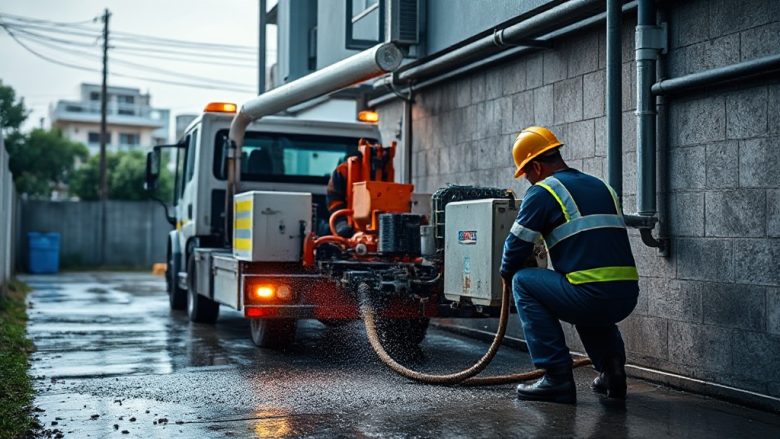
Diagnosis usually takes fifteen to thirty minutes. Clearing a simple branch-line clog can take under an hour, while a main-line blockage or a grease-packed restaurant line may take several hours and require hydro-jetting. Ask for an estimate before work begins, and ask what happens if the blockage turns out to be worse than expected.
Which tools should you expect to see?
- A manual auger for short blockages close to the fixture.
- A motorized drain snake for longer runs and tougher clogs.
- Hydro-jetting equipment for grease, scale, and roots in larger pipes.
- A camera inspection when the cause is unclear or the problem keeps returning.
If a company arrives with only a plunger and no way to inspect the line, that is a warning sign. You want the option of seeing what is actually inside the pipe.
4. Who is responsible in a condominium, and how do you avoid paying twice?
In a condominium, the boundary between private and shared plumbing is the key question. Generally, the branch line serving one unit is the owner’s responsibility, while the main stack and the line to the street are the building’s. But the exact split depends on the building’s convention and the location of the blockage, so confirm it with the síndico or the administrator before authorizing work.
Avoid paying twice by asking the technician to document where the blockage was found. A short written report or a photo of the cleanout and the camera view settles most disputes. If the blockage is in a shared line, the building should bear the cost; if it is inside your unit, it is yours.
This is also where a coordinated desentupidora em Grajaú São Paulo SP service helps, because experienced teams are used to working with building managers and can provide the documentation the condominium needs.
5. What does it cost, and what changes the price?
Prices in Grajaú vary with access, time of day, and the equipment required. A straightforward branch-line clearing is at the lower end; a main-line blockage, hydro-jetting, camera inspection, or an after-hours emergency call adds cost. Distance and parking are minor factors, but access is not: a pipe behind a finished wall or under a slab can turn a simple job into a bigger one.
| Job type | Typical effort | What affects the price |
|---|---|---|
| Single fixture clog | Short visit | Access, pipe condition |
| Main-line blockage | Longer visit | Depth, cleanout location, equipment |
| Hydro-jetting | Half day or more | Pipe diameter, grease or root volume |
| Emergency night call | Variable | Time, urgency, travel |
Always ask whether the quote includes the visit, the clearing, and any follow-up inspection. A low initial price that excludes the camera or the second visit is not a bargain.
6. How do you prevent the same blockage from coming back?
Most repeat blockages are caused by the same habits. Grease poured down the kitchen sink, wipes flushed down the toilet, and hair collected in the shower drain are the three most common culprits. In older Grajaú homes, tree roots in the lateral line are a fourth. Prevention is unglamorous but effective.
- Pour cooled grease into a container and throw it in the trash, never down the sink.
- Use drain strainers in the kitchen and bathroom and clean them weekly.
- Never flush wipes, cotton buds, or sanitary products, even if the label says flushable.
- Schedule a preventive inspection if you have had two blockages in the same line within a year.
If the same drain backs up repeatedly, stop treating it as a series of emergencies. A camera inspection and a proper cleaning usually cost less than three emergency calls.
7. Frequently asked questions about drain service in Grajaú
How quickly can a team arrive in Grajaú?
Response time depends on traffic, time of day, and how many calls are active. Emergency services operate around the clock, but a realistic estimate should come from the dispatcher when you call, not from a website banner.
Can the problem be fixed without breaking walls or floors?
Usually, yes. Most blockages are cleared through existing cleanouts and access points. Breaking a wall is a last resort when there is no access or when the pipe itself has collapsed.
Do I need to be home during the service?
For a house, yes, or someone trusted must be there. For a condominium, the síndico or building staff can provide access to shared areas, but the unit owner should still authorize the work.
What should I do while waiting for the team?
Stop using water in the affected area, keep the floor dry, and move valuables away from drains. If sewage is backing up, wear gloves and avoid contact with the water.