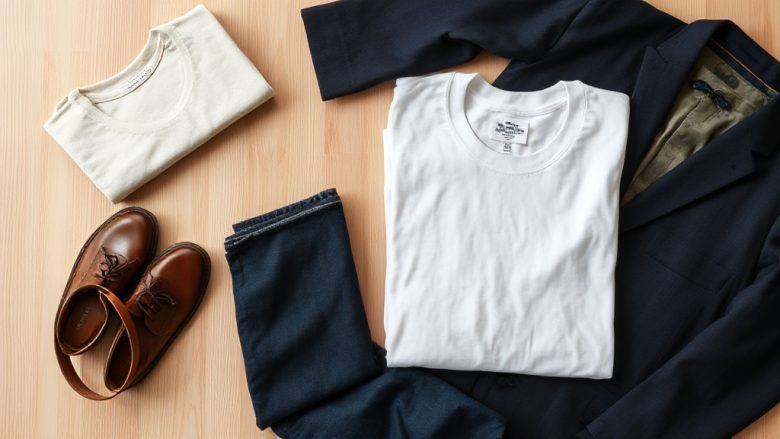
You don’t need a lot of clothes to dress well. That’s the first thing any honest beginner guide to men’s fashion should tell you. Most men who look consistently put-together own fewer items than you’d guess. They just own the right ones, and they know how those items fit together.
This beginner guide to men’s fashion skips the trends, the seasonal drops and the endless scrolling. Five pieces cover almost every situation a normal week throws at you. Get these right before you buy anything else.
1. A Plain White T-Shirt That Actually Fits
The white t-shirt is the foundation of casual dressing, and it’s the piece most beginners get wrong. Not because they pick a bad shirt, but because they pick a bad fit. A t-shirt that’s too long hangs past the hips and makes your legs look short. One that’s too tight pulls across the chest and rides up every time you lift your arms.
The right fit sits at the shoulder seam, skims the chest without clinging, and ends around the middle of your fly. Sleeves should stop mid-bicep, not at the elbow. If you find one that works, buy three of them. Cotton with a bit of weight holds its shape better than thin fabric that goes see-through under light.
Why it matters: a clean white tee works under a jacket, on its own with jeans, and layered under an overshirt. It’s the one piece that pairs with everything else in your wardrobe. When it fits properly, it signals that you pay attention. When it doesn’t, no amount of styling saves it.
2. Dark Indigo or Black Jeans in a Straight Cut
Jeans are the workhorse of any beginner wardrobe, but the wash and cut matter more than the brand. Dark indigo and black are the two most versatile options. They read as slightly smarter than faded blue, which means they work for dinner, a date, or an office with a relaxed dress code. Light washes and heavy distressing push you toward weekend-only territory.
On cut, straight or slim-straight is the safest starting point. Skinny jeans have fallen out of favour for good reason: they bunch at the ankle, restrict movement and look dated in photos. Wide-leg styles can work, but they’re harder to pull off when you’re still learning proportions. Straight cuts sit cleanly over most shoes and don’t require you to think about it.
Watch the length. A small break at the shoe is fine. A pool of fabric around your ankles is not. If you’re between sizes, size up and have a tailor take in the waist rather than squeezing into something tight.
3. A Well-Fitting Navy Blazer
This is the item that surprises beginners most. A navy blazer sounds formal, but it’s actually the most flexible jacket you can own. Throw it over a t-shirt and jeans and you’re dressed for most restaurants. Wear it with chinos and a button-down and you’re set for a wedding, an interview or a work presentation.
Navy works because it flatters nearly every skin tone and pairs with grey, white, black, brown and denim. Avoid black for a first blazer; it’s less forgiving and reads as either a suit jacket or a nightclub outfit. Look for a wool or wool-blend fabric with a simple notch lapel and no flashy details.
Fit is everything here. Shoulders should sit flush with your own, the button should close without pulling, and the sleeve should show a sliver of shirt cuff. If those three things are right, a cheap blazer beats an expensive one that fits badly. A tailor can fix the waist and sleeves for a modest cost, and it’s worth doing.
4. Clean, Simple Leather Shoes
Shoes are the fastest way to upgrade an outfit, and the fastest way to ruin one. A beginner needs one pair that works across smart and casual settings. Plain leather sneakers in white or off-white cover the casual end. Brown leather derbies or Chelsea boots cover the smarter end. If you can only buy one pair, choose based on where you spend most of your time.
Skip anything with heavy branding, chunky soles or visible logos. They date quickly and limit what you can wear them with. Leather beats synthetic every time because it ages rather than falls apart. Keep them clean. A five-minute wipe-down once a week does more for your appearance than most purchases.
One practical note: match your belt to your shoes in tone, not exactly in colour. Brown with brown, black with black. It’s a small rule that quietly holds an outfit together.
5. A Neutral Overshirt or Light Jacket
The fifth essential is the layer you reach for when it’s too cool for a t-shirt but too warm for a coat. A neutral overshirt in olive, navy, grey or tan fills that gap. It adds texture and structure to a plain tee and jeans without looking like you tried too hard.
Alternatives work too: a Harrington jacket, a simple bomber, or a chore coat. The point is to have one mid-layer that isn’t sportswear and isn’t formal. Hoodies and zip-up track jackets have their place, but they pull an outfit casual in a way that’s hard to dress back up.
Choose a colour that appears elsewhere in your wardrobe. If you own navy, denim and white, an olive or tan layer adds contrast without clashing. If you own mostly black and grey, a navy or charcoal layer keeps things cohesive.
How to Make These Five Pieces Work Together
Five items sound limiting until you do the maths. A white tee, dark jeans, a navy blazer, one pair of leather shoes and a neutral layer give you dozens of combinations. Swap the blazer for the overshirt and you go from smart-casual to relaxed. Add the blazer over the overshirt and you’ve got a layered look that handles cooler weather.
The trick is keeping everything in a tight colour range. Navy, white, grey, black, olive and tan all play nicely together. Introduce one accent colour at a time, and only once you’re comfortable with the basics. Loud patterns and bright colours aren’t wrong, but they’re harder to combine and they draw attention to the outfit rather than to you.
Fit beats price every single time. A cheap t-shirt that fits perfectly looks better than an expensive one that doesn’t. Learn your measurements: chest, shoulder width, sleeve length, waist and inseam. Write them down. Once you know them, shopping becomes faster and returns become rarer. A tailor can adjust most off-the-rack clothing for a small fee, and that adjustment is often the difference between looking fine and looking sharp.
Finally, don’t rush. Buy one piece, wear it for a few weeks, and see how it fits into your life. Build slowly. A wardrobe assembled over a year will fit you better than one bought in a single afternoon.
Frequently Asked Questions
How many clothes does a beginner actually need?
Fewer than you think. Five well-chosen core pieces cover most situations. From there, add duplicates of what you wear most, like extra t-shirts or a second pair of jeans. A wardrobe of twenty items you wear regularly beats one of sixty you ignore.
What should I buy first if I’m starting from nothing?
Start with the white t-shirt and dark jeans. They’re inexpensive, easy to fit, and you’ll wear them constantly. Once those feel right, add shoes, then the blazer, then the layer. This order lets you build outfits as you go instead of waiting for a full wardrobe.
Is it worth paying for a tailor?
Yes, for anything you’ll wear often. Hemming trousers, taking in a waist or shortening sleeves costs little and changes how the garment looks on you. Fit is the single biggest factor in whether clothes look good, and most off-the-rack items need at least one adjustment.
How do I know if something fits properly?
Check three points: the shoulder seam should sit at the edge of your shoulder, the fabric shouldn’t pull or bunch when you move, and the length should end where you want it. If any of those are off, try another size or a different cut before assuming the problem is you.
Style isn’t a talent. It’s a short list of good decisions repeated often. Own these five pieces, keep them clean and fitting well, and you’ll look better than most people in the room without thinking about it.